Insulated Panels vs Traditional Building Materials: Which Is Better?
Choosing the right building material is one of the most important decisions in any construction project. From cost and durability to energy efficiency and speed of installation, the materials you select can significantly impact both short-term and long-term performance.
In this article, we compare insulated panels with traditional building materials to help developers, contractors, and facility owners make an informed decision.
What Are Insulated Panels?
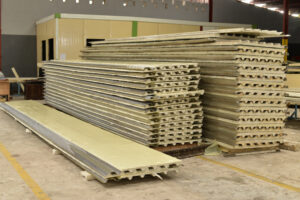
Insulated panels (often called sandwich panels) are prefabricated building materials made of two outer metal sheets with an insulating core (such as EPS, PIR, or PUR). They are commonly used for:
-Warehouses
-Cold rooms
-Factories
-Commercial and industrial buildings
What Are Traditional Building Materials?
Traditional materials include:
-Blocks and bricks
-Concrete
-Timber
-Steel structures without integrated insulation
These materials usually require separate insulation layers, plastering, and finishing.
Key Comparison: Insulated Panels vs Traditional Materials
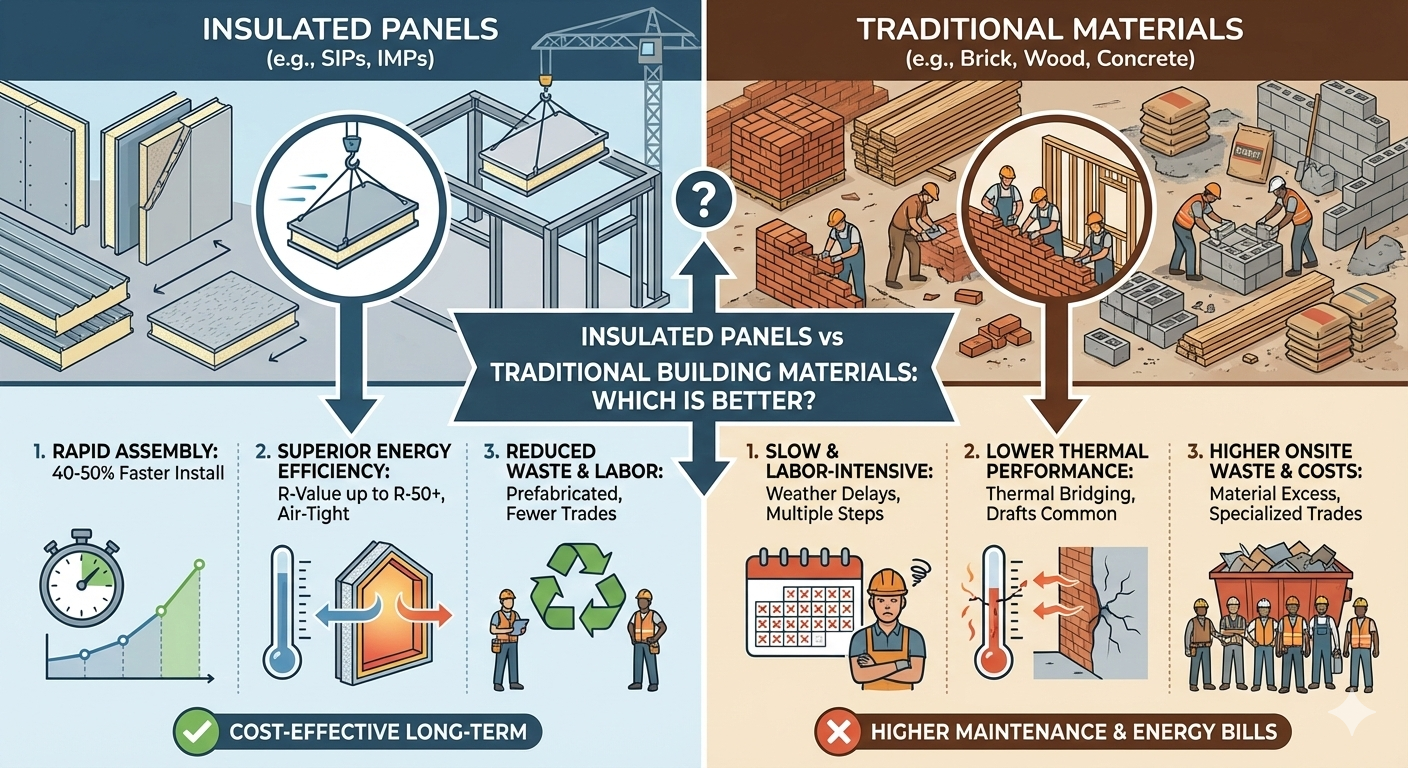
1️⃣ Energy Efficiency
Insulated Panels:
✔ Built-in thermal insulation
✔ Reduces heat transfer
✔ Lowers energy and cooling costs
Traditional Materials:
✖ Require added insulation
✖ Higher long-term energy consumption
✅ Winner: Insulated Panels
2️⃣ Speed of Construction
Insulated Panels:
✔ Prefabricated and quick to install
✔ Shorter project timelines
Traditional Materials:
✖ Slower construction process
✖ Multiple stages (blockwork, plastering, insulation)
✅ Winner: Insulated Panels
3️⃣ Cost Effectiveness
Insulated Panels:
✔ Lower labour costs
✔ Reduced long-term energy expenses
Traditional Materials:
✖ Higher labour and finishing costs
✖ Increased operational expenses over time
✅ Winner: Insulated Panels (long-term)
4️⃣ Durability & Maintenance
Insulated Panels:
✔ Resistant to moisture and corrosion
✔ Low maintenance
Traditional Materials:
✖ Cracks, dampness, and wear over time
✖ Higher maintenance needs
✅ Winner: Insulated Panels
5️⃣ Design & Flexibility
Insulated Panels:
✔ Clean, modern finish
✔ Suitable for industrial and commercial use
Traditional Materials:
✔ More flexibility for residential and aesthetic designs
✅ Winner: Depends on project type
Which Is Better?
The answer depends on your project goals:
-
For industrial, commercial, cold room, or warehouse projects, insulated panels are clearly the better choice due to speed, efficiency, and cost savings.
-
For residential or highly decorative buildings, traditional materials may still be suitable.
Why Insulated Panels Are Ideal for Nigeria’s Climate
Nigeria’s climate demands materials that handle heat, humidity, and energy efficiency. Insulated panels help maintain stable indoor temperatures while reducing dependence on air conditioning — making them a smart and sustainable solution.
Conclusion
Insulated panels offer a modern, efficient, and cost-effective alternative to traditional building materials, especially for commercial and industrial projects. Their energy efficiency, speed of installation, and durability make them an excellent investment for forward-thinking developers.
Need Expert Advice?
At Lange & Grant, we supply high-quality insulated panels designed for durability, efficiency, and performance.
👉 Contact us today to discuss the best solution for your project.