Cold Room Panels Nigeria: Complete Guide to Cold Room Construction
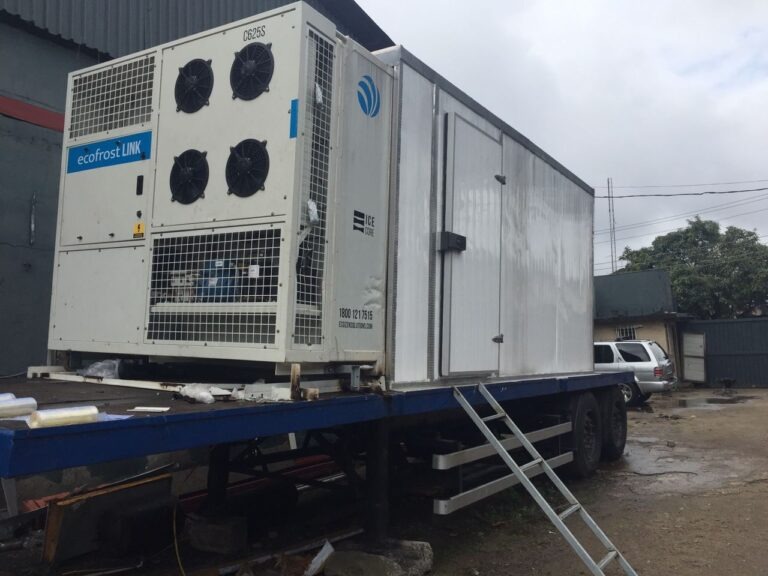
Cold room panels Nigeria are an important part of designing efficient temperature-controlled storage facilities for businesses across the country. From food processing and agriculture to supermarkets, restaurants, pharmaceuticals and seafood storage, properly selected cold room panels help create an insulated environment that supports consistent temperature control.
Cold storage plays an important role in industries where products must be kept at controlled temperatures from production to distribution. In Nigeria, cold rooms are widely used for food storage, agriculture, pharmaceuticals, hospitality, supermarkets, restaurants, seafood, meat processing and other temperature-sensitive operations.
One of the most important decisions when planning a cold room is choosing the right cold room panels. The quality, insulation performance and installation of these panels can directly affect temperature stability, energy consumption and the long-term performance of the cold storage facility.
For businesses planning cold room construction in Nigeria, understanding how insulated panels work and what to consider before installation can help ensure the facility is designed for its intended application.
What Are Cold Room Panels?
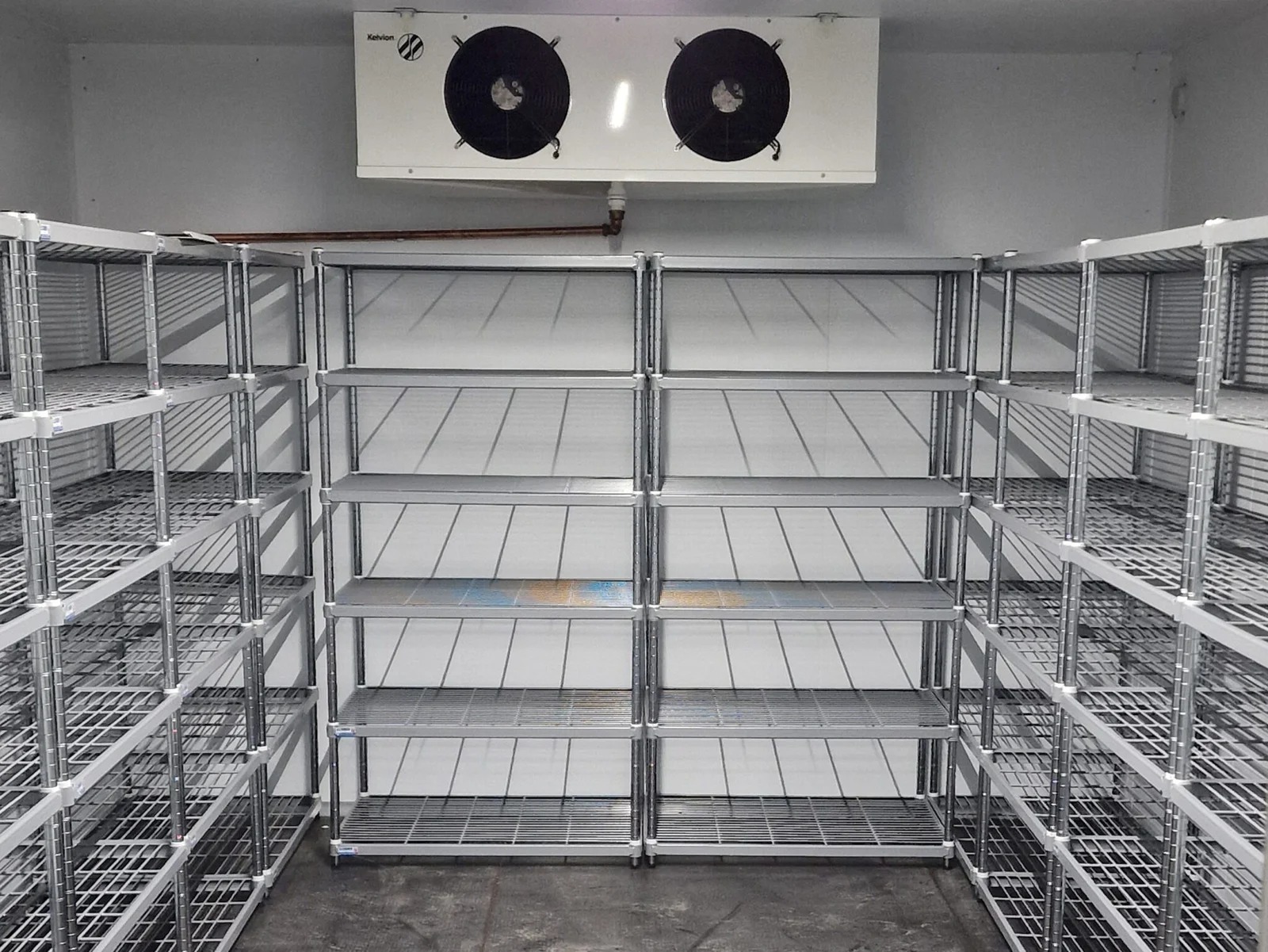
Cold room panels are specially designed insulated panels used to create the walls, ceilings and, depending on the design, other insulated sections of a temperature-controlled room.
Unlike conventional building materials, cold room panels are designed to reduce heat transfer between the inside and outside of the cold room.
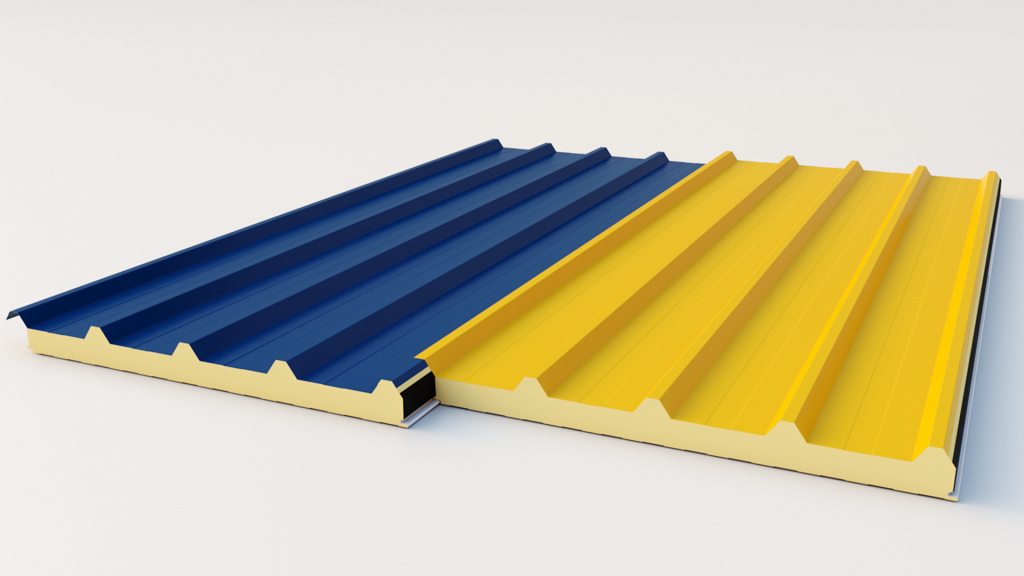
A typical insulated panel consists of an insulation core positioned between protective metal surfaces. Polyurethane (PU) is commonly used as an insulation material because of its thermal insulation properties.
The panels are manufactured in controlled sizes and assembled to create an insulated enclosure around the cold storage area.
This makes PU sandwich panels particularly suitable for applications where maintaining a stable internal temperature is important.
Why Are Cold Room Panels Important?
The refrigeration system is only one part of an effective cold room.
A powerful refrigeration system cannot perform efficiently if the cold room has poor insulation, improperly sealed joints or inadequate doors.
The insulated enclosure helps reduce unwanted heat transfer and allows the refrigeration system to maintain the required temperature more efficiently.
For a broader overview of insulated panel types, benefits, applications and installation considerations, see our
Complete Guide to Insulated Sandwich Panels.
The right cold room insulation panels can help with:
- Temperature control
- Reduced heat transfer
- Improved refrigeration efficiency
- Protection of stored products
- Reduced temperature fluctuations
- Faster installation
- Easier maintenance
- Long-term durability
For businesses investing in cold storage, the panel system should therefore be considered alongside the refrigeration equipment, flooring, doors, ventilation and other components of the facility.
Cold Room Construction in Nigeria: What Should You Consider?
There is no single cold room design that works for every business.
A cold room for fresh vegetables may have different requirements from a freezer room for frozen meat, while a pharmaceutical storage facility may have completely different temperature-control requirements.
Before purchasing cold room panels in Nigeria, several factors should be considered.
1. What Products Will Be Stored?
The first question should be: what will the cold room be used for?
Different products have different storage requirements.
Cold storage facilities may be used for:
- Fresh fruits and vegetables
- Meat and poultry
- Fish and seafood
- Dairy products
- Frozen foods
- Beverages
- Pharmaceuticals
- Agricultural products
- Processed foods
Understanding the product and its required storage conditions helps determine the appropriate cold room design and refrigeration requirements.
2. Required Storage Temperature
Temperature requirements are another important consideration.
A chilled storage room does not necessarily require the same design as a freezer room.
For example, some applications require temperatures above freezing, while frozen-product storage requires significantly lower temperatures.
The insulation system, refrigeration equipment, doors and other components should therefore be selected based on the intended operating temperature.
3. Panel Thickness and Insulation Performance
Panel thickness is an important consideration when designing a cold room.
The appropriate thickness depends on factors such as:
- Required internal temperature
- External environmental conditions
- Cold room size
- Type of product being stored
- Refrigeration system
- Frequency of door opening
- Application of the facility
In Nigeria’s warm climate, proper thermal insulation is particularly important because the temperature difference between the external environment and the cold room can be significant.
Rather than selecting panels based only on price, project owners should consider the insulation requirements of the entire facility.
4. Panel Joints and Sealing
Even high-quality insulation panels can lose performance when joints, corners, doors and penetrations are poorly installed.
Proper installation and sealing help reduce unwanted air movement and heat transfer.
This is why cold room installation should be handled by professionals who understand insulated panel systems and temperature-controlled environments.
Attention should be given to:
- Panel joints
- Corner connections
- Ceiling connections
- Door frames
- Service penetrations
- Floor-to-wall connections
- Refrigeration pipe penetrations
A properly installed panel system creates a more effective insulated enclosure.
PU Sandwich Panels for Cold Rooms
Polyurethane sandwich panels are widely used in temperature-controlled environments because polyurethane provides effective thermal insulation within a relatively lightweight panel system.
The sandwich construction combines an insulation core with protective external surfaces, providing a practical solution for creating insulated walls and ceilings.
For cold storage projects, PU sandwich panels can provide several advantages, including:
Thermal Insulation
The insulation core helps reduce heat transfer between the cold room and the surrounding environment.
Lightweight Construction
Compared with some traditional construction methods, prefabricated insulated panels can simplify handling and installation.
Faster Installation
Panels are manufactured to defined dimensions and assembled on site, which can help reduce construction time when the project is properly planned.
Easy-to-Clean Surfaces
Depending on the panel finish and application, smooth panel surfaces can provide a practical environment for facilities where cleanliness and hygiene are important.
Flexible Design
Cold rooms can be designed in different sizes and configurations depending on the available space and operational requirements.
Cold Room Panels vs Traditional Block Walls
Traditional block walls can be used as part of certain building designs, but they do not automatically provide the same insulation system required for a temperature-controlled environment.
A properly designed cold room requires more than simply creating four walls and installing a refrigeration unit.
The insulated envelope needs to work together with the refrigeration system to control heat transfer.
Purpose-designed cold room insulation panels provide insulation as part of the wall and ceiling assembly.
This is one reason insulated panel systems are commonly used for cold rooms, freezers, food-processing areas and other temperature-controlled spaces.
Common Applications of Cold Rooms in Nigeria
Cold rooms support businesses across several sectors.
Agriculture and Food Production
Farmers, processors and distributors can use cold storage to help preserve temperature-sensitive agricultural products before they reach markets or processing facilities.
Meat and Poultry
Cold rooms and freezer rooms are used by meat processors, distributors, restaurants, supermarkets and other businesses handling temperature-sensitive products.
Fish and Seafood
Fish and seafood require controlled storage conditions to help maintain product quality throughout the supply chain.
Supermarkets and Retail
Retail businesses may require chilled and frozen storage for products awaiting display or distribution.
Hospitality
Hotels, restaurants and catering businesses can use cold storage facilities for food and beverage inventory.
Pharmaceuticals
Temperature-controlled storage can be required for pharmaceutical and other temperature-sensitive products. Such facilities require appropriate specifications based on the products being stored.
Common Mistakes to Avoid When Building a Cold Room
Building a cold room is a technical project, and mistakes during design or installation can affect operating costs and performance.
Here are some common issues to avoid.
Choosing Panels Based Only on Price
The cheapest panel may not necessarily be the most appropriate solution for a particular application.
Panel thickness, insulation performance, surface finish, installation quality and the intended operating temperature should all be considered.
Underestimating the Importance of Installation
Poorly fitted panels can create gaps and thermal bridges.
Even a good insulation material can perform poorly when the installation is not properly executed.
Ignoring the Cold Room Door
The door is one of the most frequently used parts of a cold room.
An unsuitable or poorly sealed door can allow warm air to enter and place additional demand on the refrigeration system.
Poor Joint Sealing
Gaps around panel joints, corners and service penetrations can compromise the insulated enclosure.
Proper sealing should therefore be part of the installation process.
Failing to Plan for Future Expansion
Businesses sometimes build a cold room based only on their current storage requirements.
If expansion is likely, the initial design should take future capacity into consideration.
How to Choose a Cold Room Construction Company in Nigeria
Choosing the right contractor or supplier is just as important as selecting the right panel.
Before starting a project, businesses should consider whether the supplier has experience with:
- Insulated sandwich panels
- Cold room design
- Cold room installation
- Temperature-controlled environments
- Panel estimation
- Technical drawings
- Site installation
- Maintenance and technical support
It is also important to clearly communicate the intended use of the cold room, storage capacity, required temperature, available space and expected operating conditions.
This information allows the project team to develop a solution suited to the application rather than simply supplying standard materials.
Why Insulated Panels Matter in Nigeria’s Climate
Nigeria’s generally warm climate makes thermal insulation an important consideration for temperature-controlled facilities.
The greater the difference between the external temperature and the required internal temperature, the more important it becomes to control heat transfer through the building envelope.
A properly designed insulated panel system can therefore play an important role in helping a refrigeration system maintain the required internal conditions.
However, insulation is only one part of the overall system. Refrigeration capacity, door usage, product loading, ambient conditions, room size, lighting and other operational factors should also be considered during design.
Lange & Grant Cold Room and Insulated Panel Solutions
At Lange & Grant, we provide insulated building solutions for commercial and industrial applications.
Our product range includes insulated sandwich panels, insulated roof panels, insulated wall panels and other modular construction solutions.
Our insulated panels are designed for applications including cold rooms, warehouses, factories, commercial buildings and other projects where thermal insulation is important.
With technical support covering areas such as panel estimation, engineering guidance, shop drawings and site supervision, Lange & Grant works with clients to develop solutions based on their project requirements.
Our website also highlights our manufacturing capacity and focus on large-scale insulated panel production for commercial and industrial projects.
Frequently Asked Questions About Cold Room Panels
What are the best panels for a cold room?
The appropriate panel depends on the required temperature, room size, product being stored, environmental conditions and overall project design. Insulated sandwich panels with suitable insulation cores are commonly used for cold room walls and ceilings.
What are cold room panels made of?
Cold room panels generally consist of an insulated core between protective metal facings. Polyurethane is one insulation material commonly used in cold room sandwich panels.
How thick should cold room panels be?
The required thickness depends on the operating temperature, application, room dimensions, external conditions and insulation requirements. A cold room should be designed based on its specific operating conditions rather than selecting a thickness solely on price.
How much does cold room construction cost in Nigeria?
There is no single price for cold room construction in Nigeria. The total cost can depend on room dimensions, storage temperature, insulation panels, refrigeration equipment, doors, flooring, electrical requirements, installation, location and other project specifications.
For an accurate estimate, it is better to request a project-specific quotation based on the required capacity and operating conditions.
Can sandwich panels be used for freezer rooms?
Yes. Properly specified insulated sandwich panels can be used in freezer-room applications. The panel system must be selected and installed according to the required operating temperature and project specifications.
How long does a cold room last?
The service life of a cold room depends on the quality of its components, installation, operating conditions and maintenance. Regular inspection and proper maintenance can help preserve the performance of the facility.
Conclusion
A successful cold room is more than a refrigeration unit inside an enclosed space. The insulation system, panel selection, joints, doors, flooring, refrigeration equipment and installation all need to work together.
For businesses planning cold room construction in Nigeria, choosing the right cold room panels should be one of the key decisions made during the design stage.
Whether you are developing a cold storage facility for agriculture, food processing, supermarkets, restaurants, pharmaceuticals or industrial applications, the right insulated panel solution can provide the foundation for an effective temperature-controlled environment.
Planning a cold room project in Nigeria? Talk to Lange & Grant about your insulated panel requirements and request a project-specific quotation today.